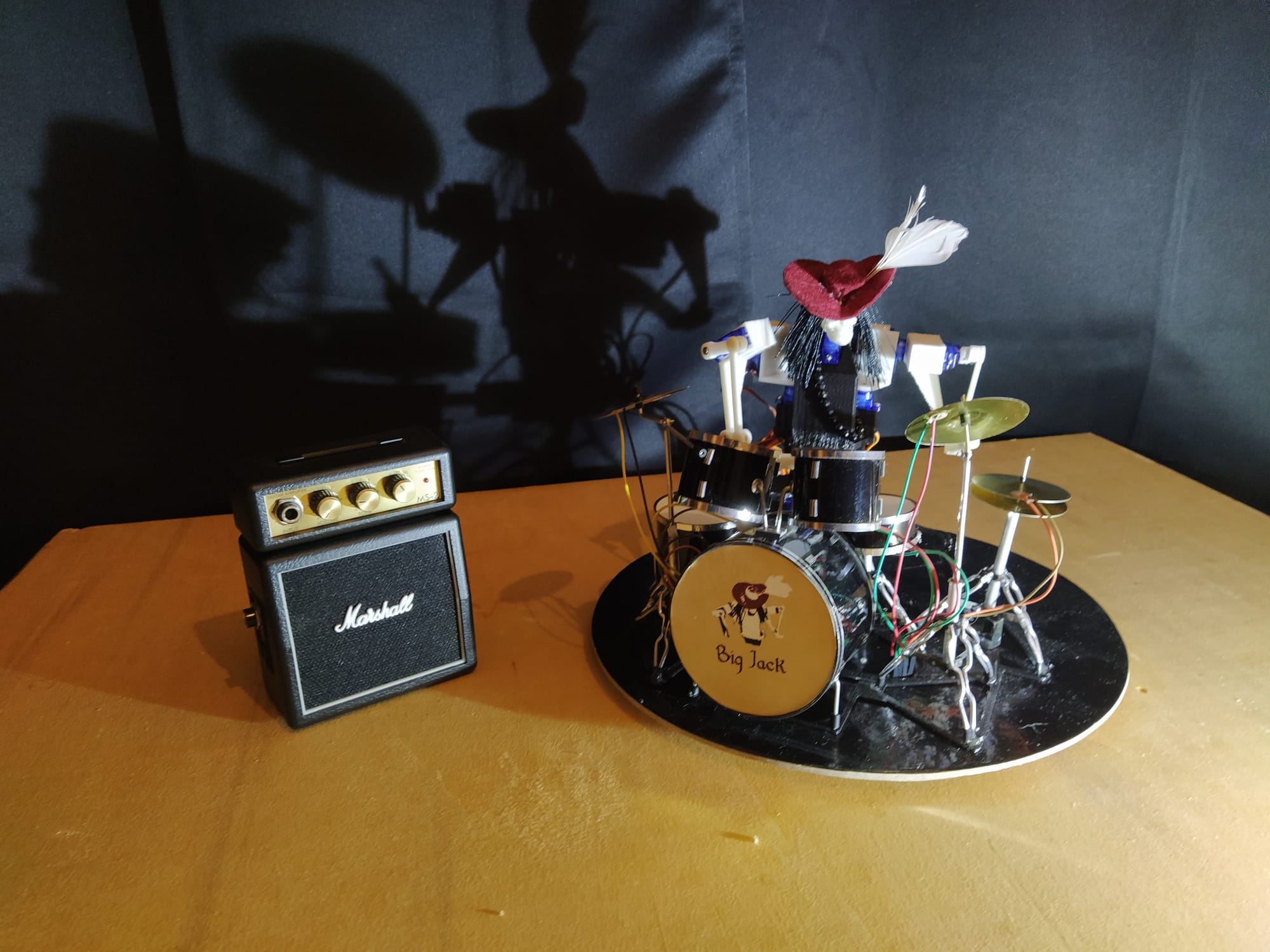

Big Jack, the 10-inch robot drummer
Load a song, press play, and he plays it. For real. Meet Big Jack, the robot drummer I built from scratch with 3D printing, servos and a lot of MIDI.
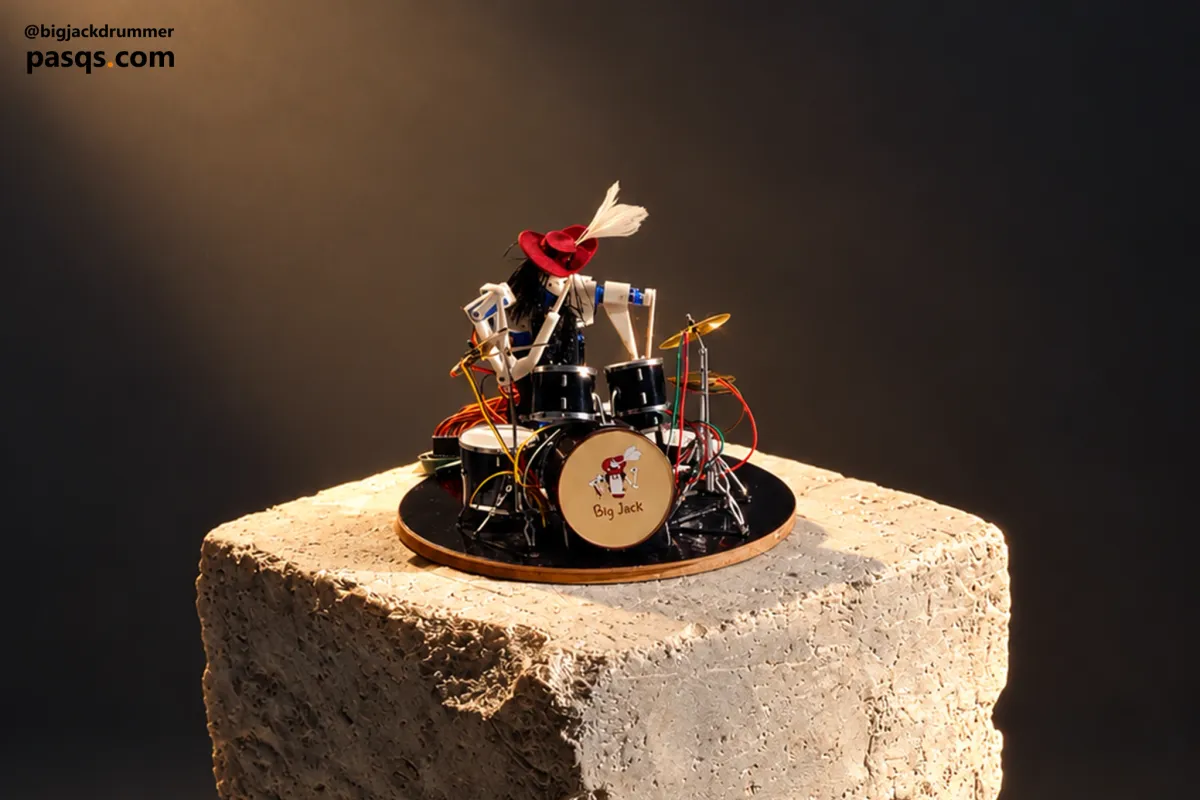
Today I’d like to introduce you to Big Jack, my robot drummer.
You load a song, press play, and he plays it. For real! No playback, no fake movements, no tricks: every sound you hear comes from a stick actually hitting a drum.
Big Jack is a little masterpiece of technology (ten inches of it, to be precise), bringing together five worlds I love: electronics, computer science, 3D modelling, robotics and, of course, music.
The idea came to me while I was working with the robotics team at CERN, and after a few conversations with my cousin, who plays guitar. Then COVID arrived, and with it the lockdowns. And what better time to build yourself a bandmate?
How it works
Big Jack’s world is made of four building blocks: the MIDI file, the robot, the drum kit and the sound module.
Everything starts from the MIDI file of a song. You can find plenty of them online, or build your own from scratch with any DAW or MIDI editor. The drum track is decoded and sent to a microcontroller, which maps its notes and durations into instructions for the robot. Those instructions become machine movements of the actuators in Big Jack’s limbs, in this case servo motors, and each movement ends in a clean hit on a piece of the kit.
The drums, in turn, have sensors that pick up every hit and turn it into an electrical signal. That signal goes to a sound module, which converts it into the drum sound you want to hear.
In short: MIDI file → microcontroller → servo motors → drum kit → sensors → sound module → sound.
Let’s look at each piece in detail.
The MIDI file
MIDI (Musical Instrument Digital Interface) is the language musical instruments and computers have been using to talk to each other since 1983. The surprising thing about a MIDI file is that it contains no sound at all. It’s a score written for machines: a list of events saying which note to play, when it starts, how hard it is played and when it stops.
Time is not stored in seconds but in ticks, fractions of a beat, while the tempo of the song is stored separately. That’s what makes MIDI so flexible: change the tempo and the whole song speeds up or slows down, without touching a single note.
Drums get special treatment. In the General MIDI standard they live on their own channel, channel 10, and on that channel a note number doesn’t mean a pitch: it means a piece of the kit. For example:
- 36: bass drum
- 38: snare
- 42: closed hi-hat
- 46: open hi-hat
- 49: crash cymbal
- 51: ride cymbal
So decoding a song for Big Jack means reading the file, keeping only the drum track, and turning every note into a simple instruction: hit this piece, at this moment. Any song with a drum part becomes something Big Jack can play.
The cool part: Big Jack
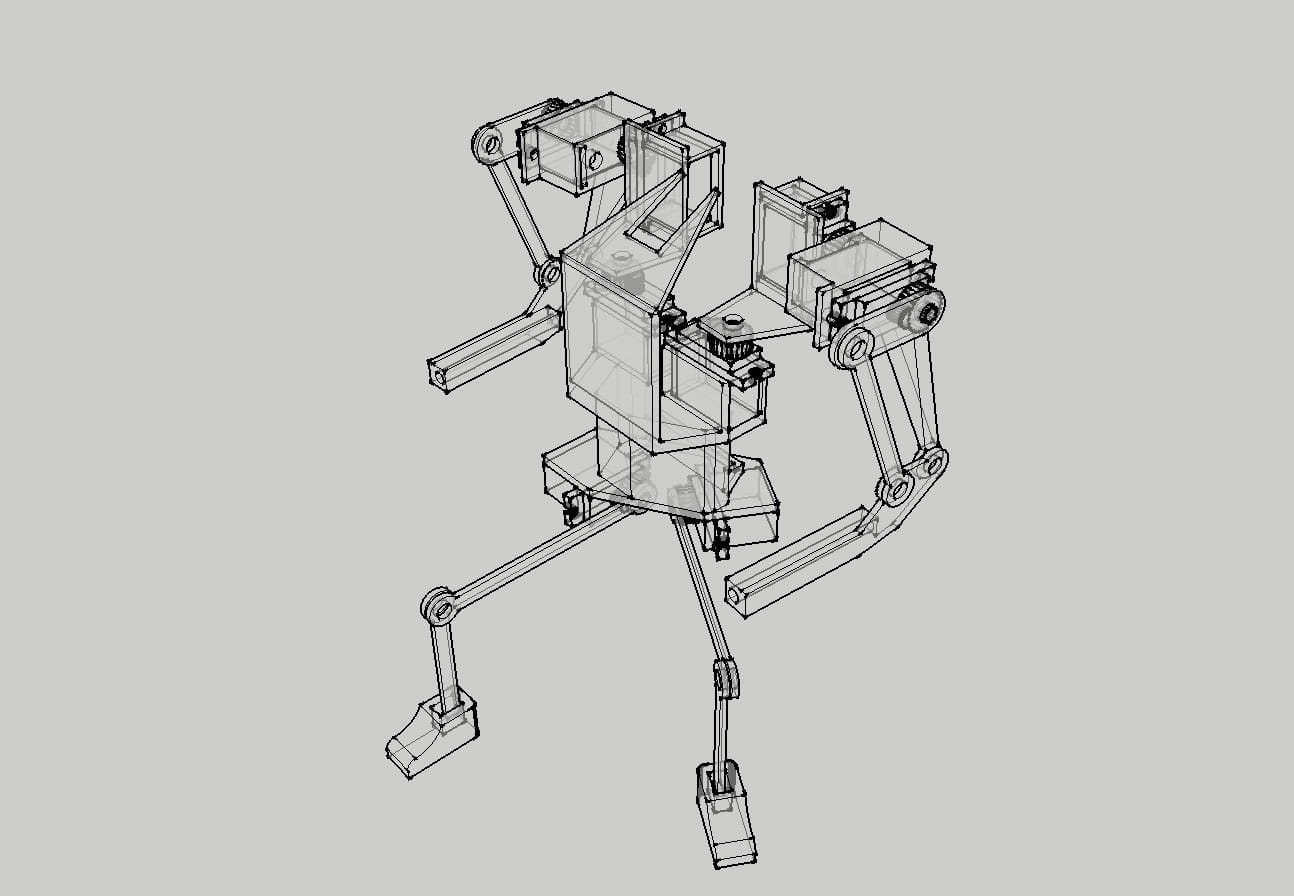
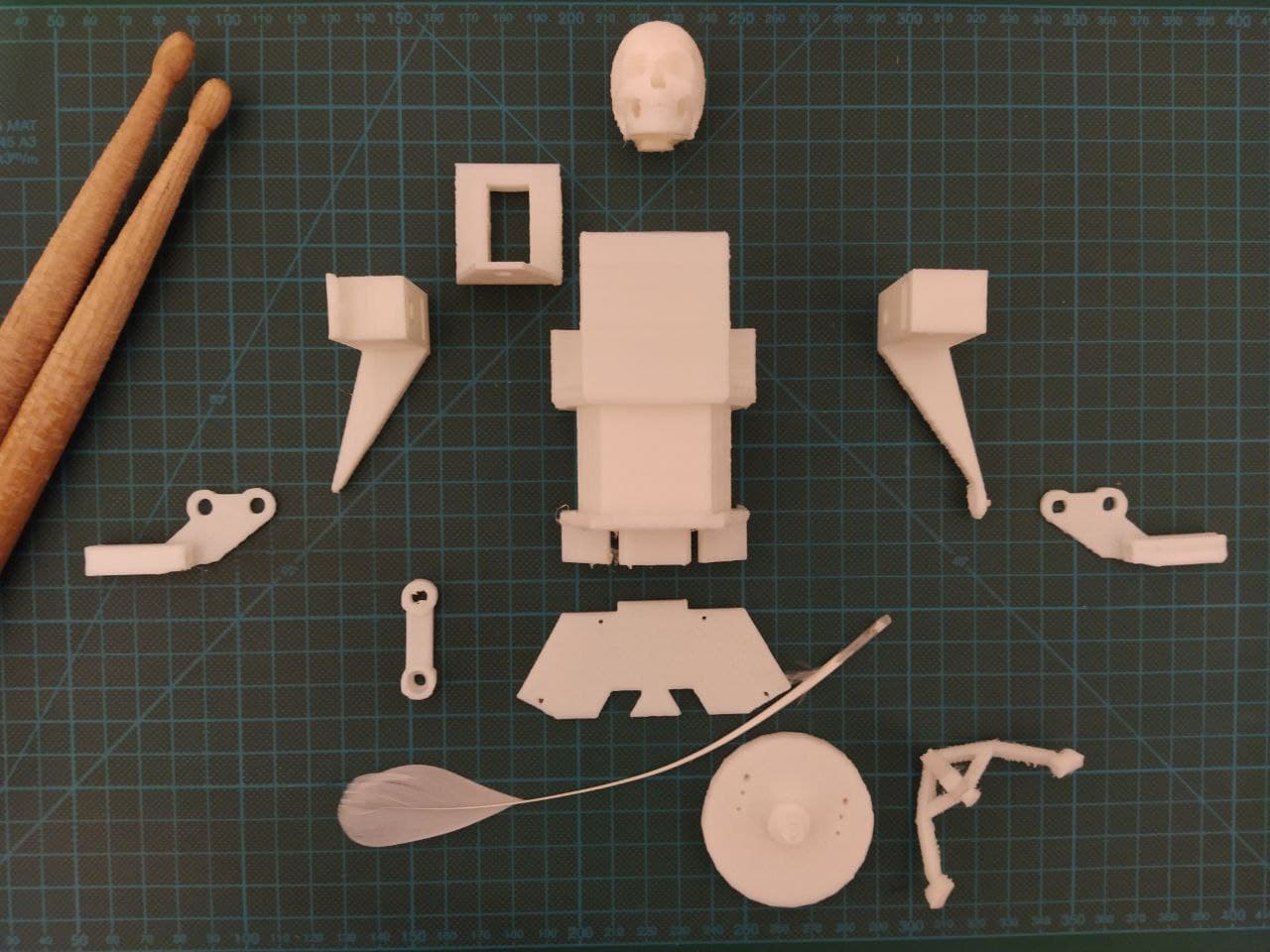
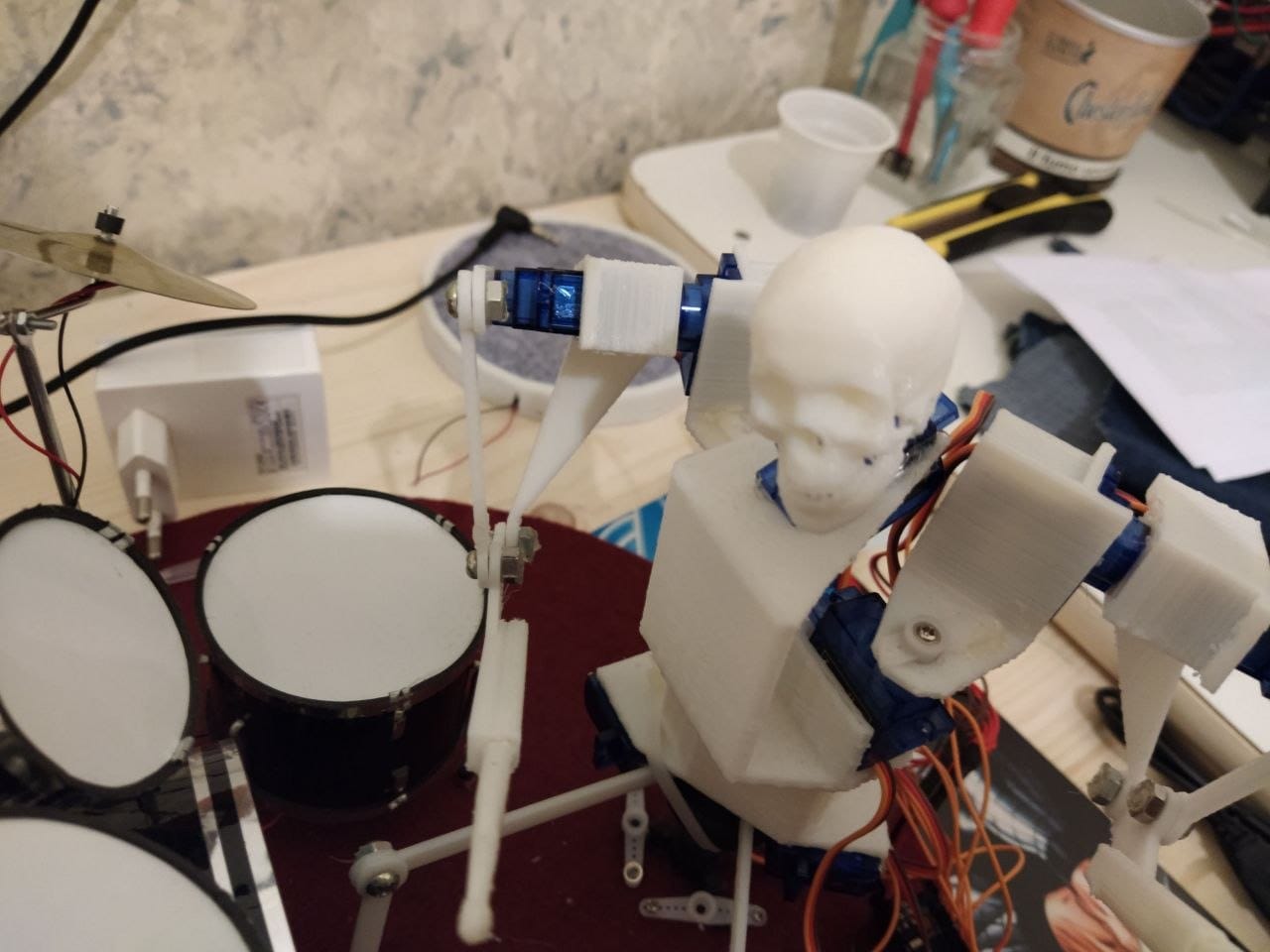
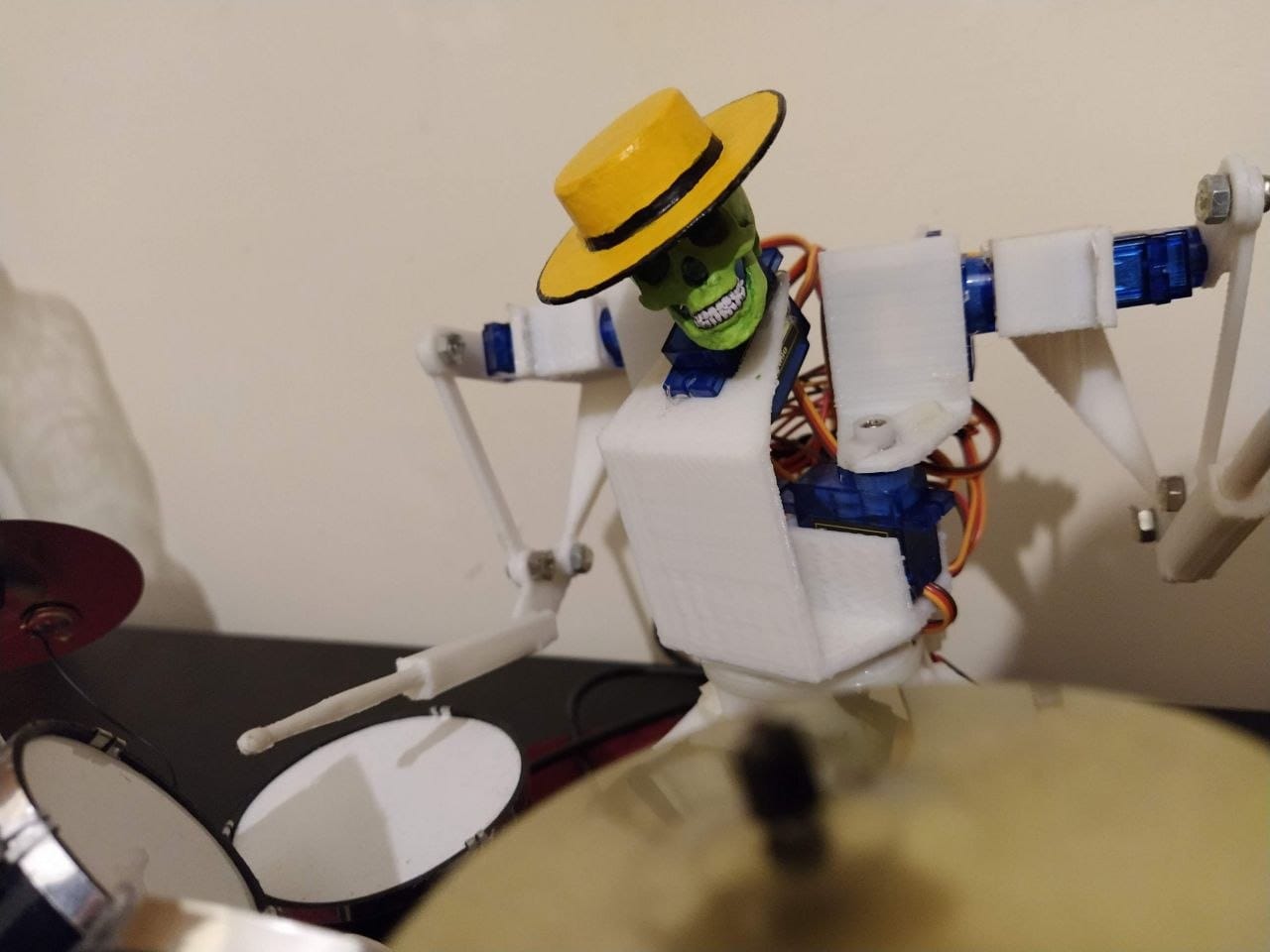
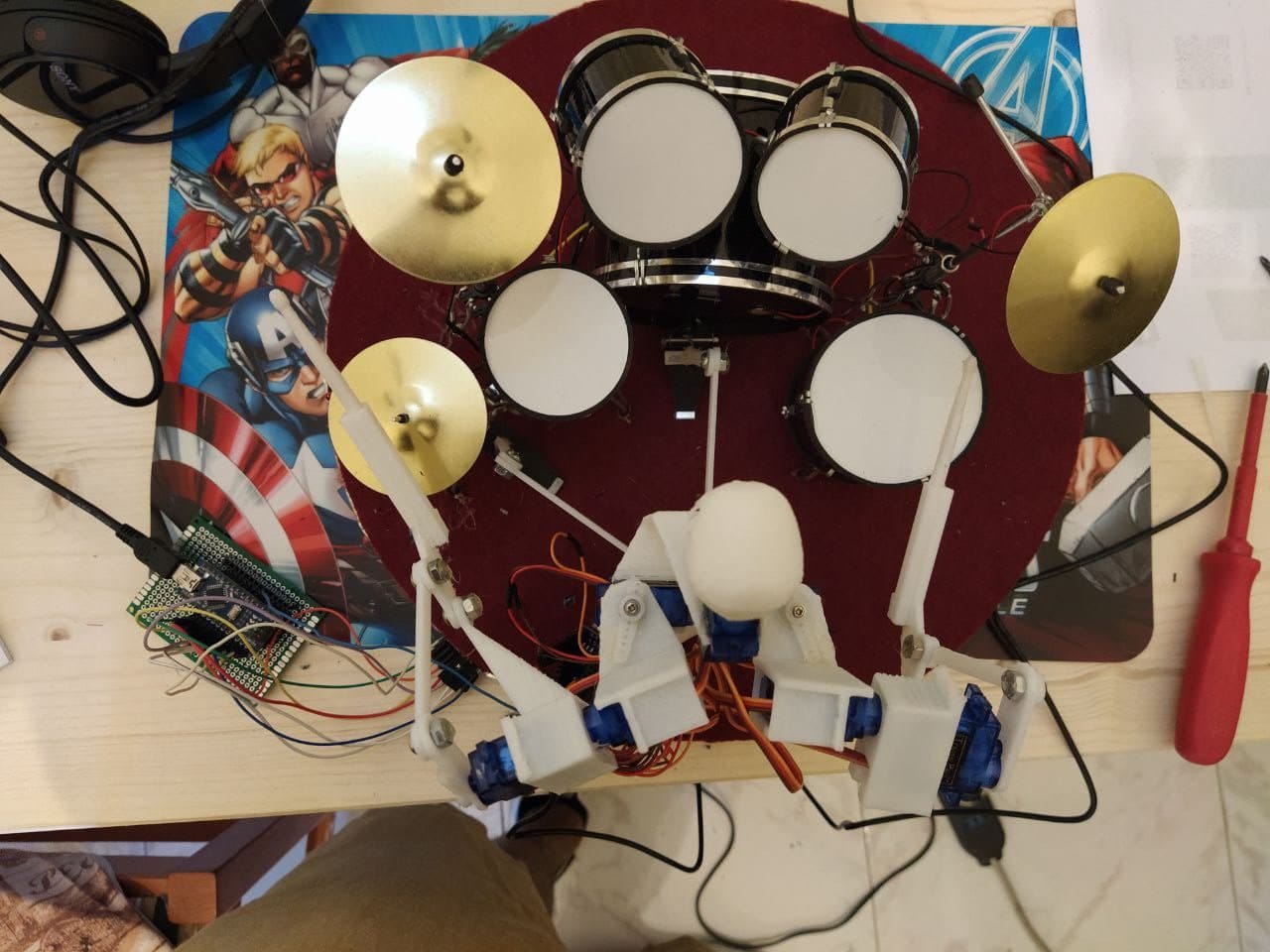
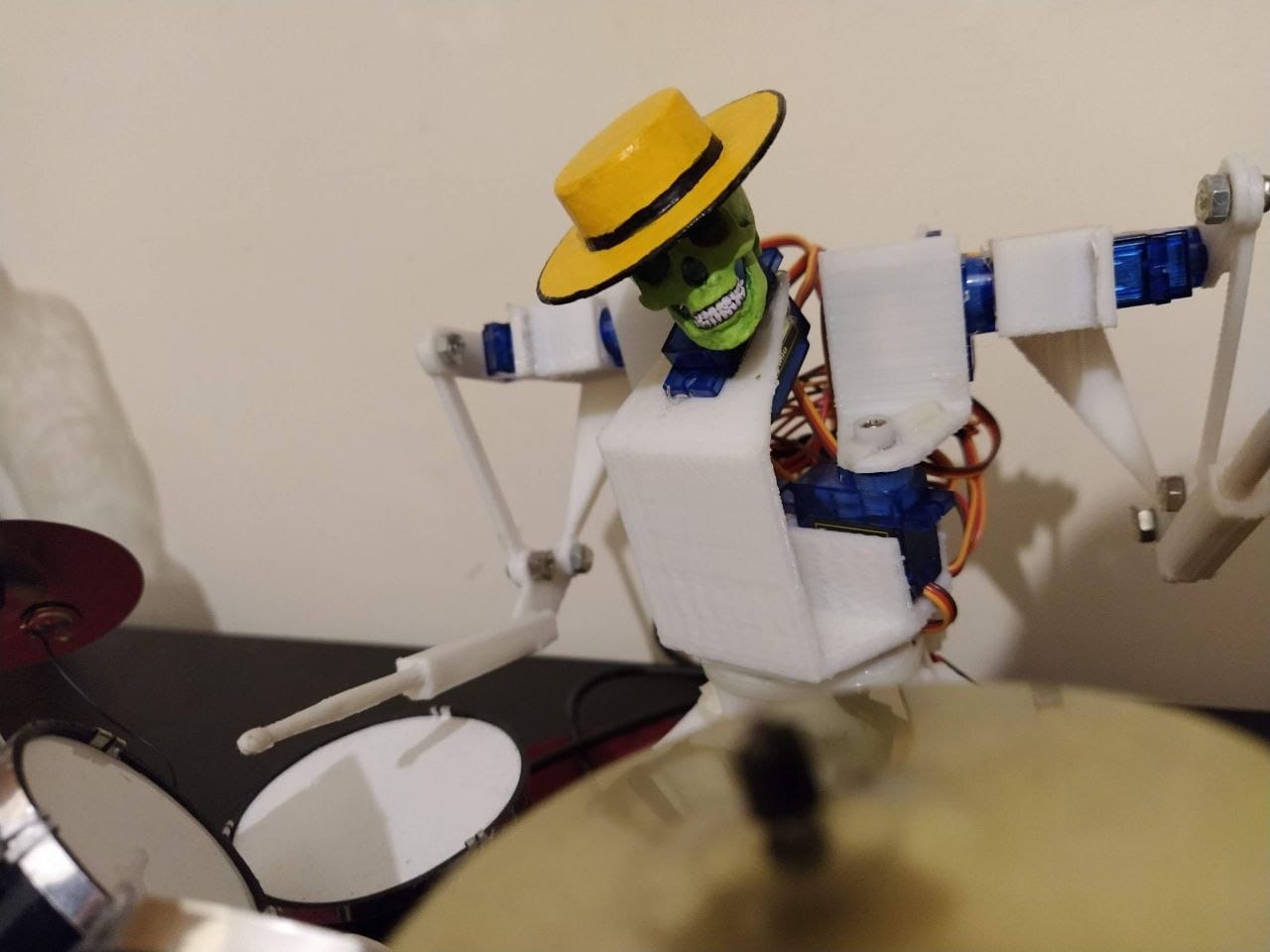
I built the robot starting from 3D modelling: arms, levers, rotations, tolerances, everything! Then I 3D printed every single piece and assembled the whole thing, fitting the motors and the bearings that make the movements possible.
All the motors converge on an Arduino. In the second version I switched to an ESP32, so that Big Jack can receive the MIDI data wirelessly. From there it was time to write the code that turns MIDI signals into the right movements, at the right moment.
I also added a few touches just for looks, like his head nodding along to the beat. And the head can be swapped, so I can change my drummer’s personality whenever I like.
The drum kit
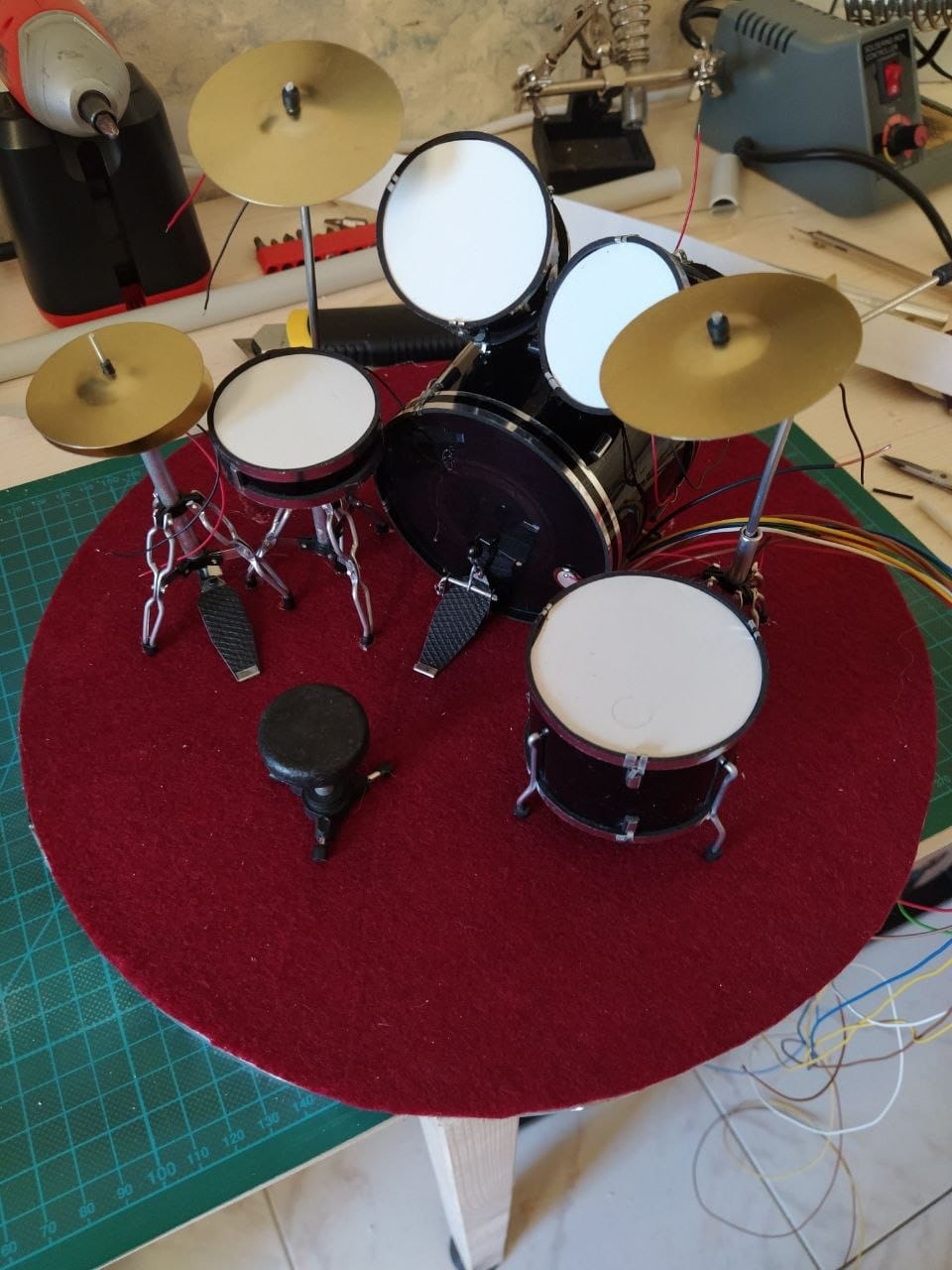
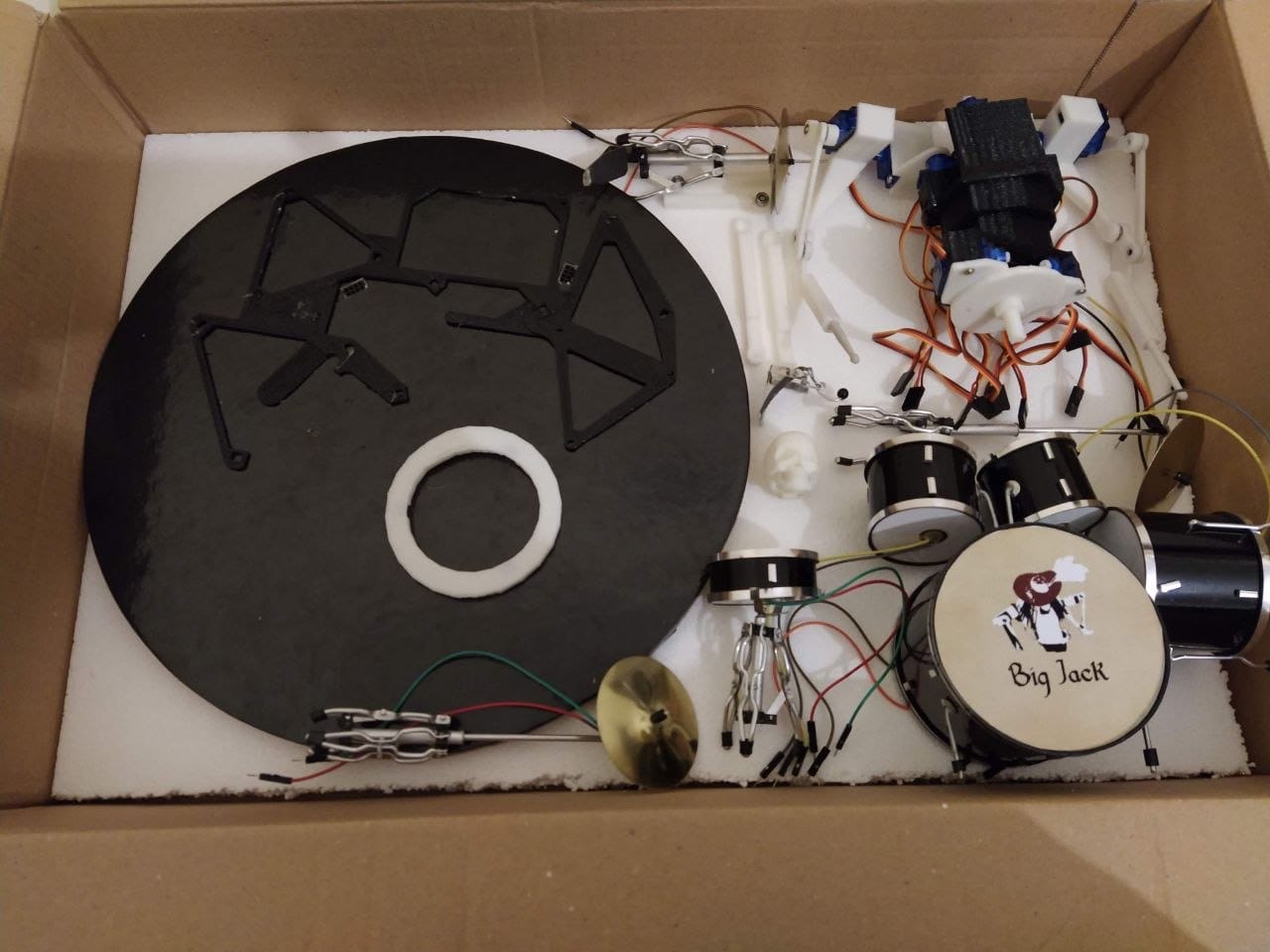
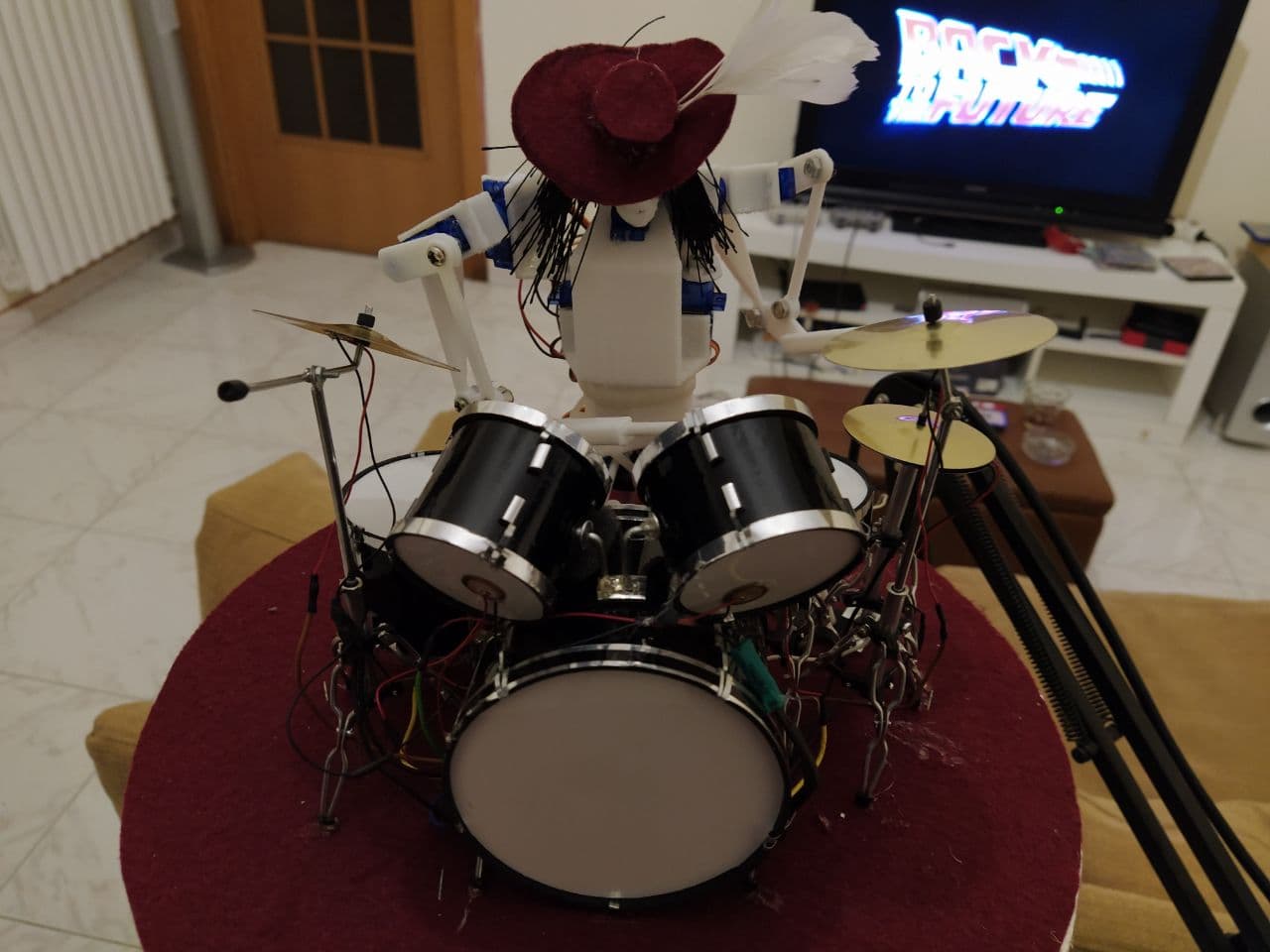
For the drums I bought a display model kit, the kind you see in the photos, and gave the bass drum a custom head with Big Jack’s own logo. Then I fitted a piezo sensor to every piece: the colourful wires you can spot running from the drums are their connections. A piezo produces a small voltage when it’s struck, which makes it a perfect hit detector.
A second Arduino reads the signals from the piezos, turns them back into MIDI notes and sends them to the sound module, which simply maps each MIDI note to a drum sound. This is what makes Big Jack the real deal: the sound comes from his actual hits. If he misses, you hear it.
In the next version I’ll skip the MIDI conversion altogether, and map the piezo signals directly to the sounds to play.
What’s next
I’m extremely happy with this first prototype of Big Jack. So happy, in fact, that I’ve decided to build a metal version of him, and two bandmates: a pianist and a bass player.
It’s an ambitious project, because all the players will have to stay perfectly in sync. But I’m sure the result will be a tight jazz trio!
I’ll leave you with some photos and videos of Big Jack in action. If you’d like to follow the project, follow Big Jack at @bigjackdrummer, or come back to my website from time to time!